Bird of the Month
December Edition: The Dark-eyed Junco
By Lauren Clement
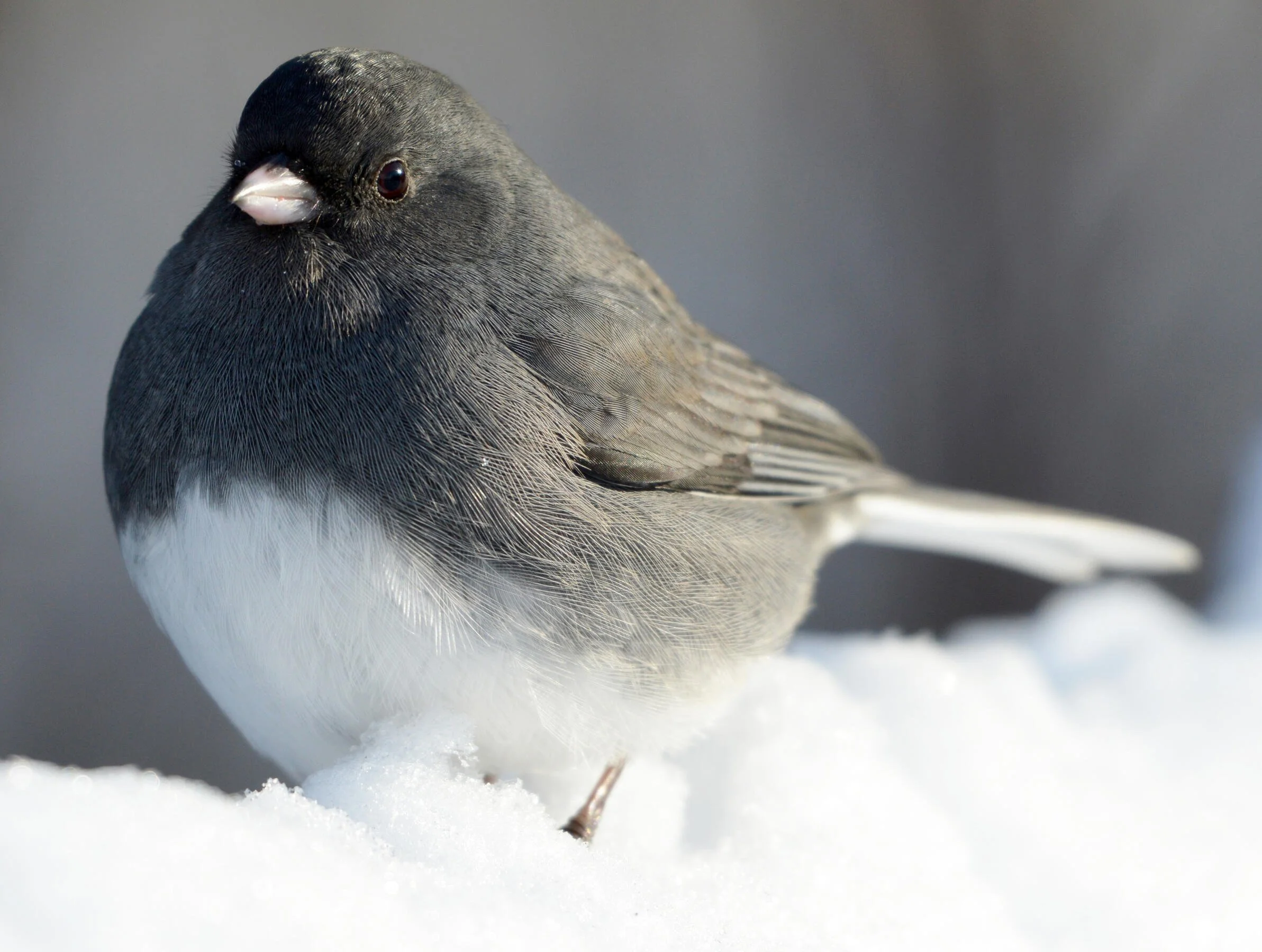
Dark-eyed Junco. Photo: Jocelyn Anderson/Audubon Photography Awards :
Have you noticed these little guys hopping around your backyard?
As winter settles in, many of our feathered friends flee for the tropics. However, one special visitor arrives just in time to embrace the cold. Meet the Dark-eyed Junco (Junco hyemalis). Often affectionately called "Snowbirds," these sparrow-sized visitors arrive from the far north just as the snowflakes begin to fall.
How to Spot Them
Approachable and calm, Juncos are likely already in your backyard. They are easy to identify by their "business casual" look:
Crisp, slate-grey hood and back contrasted by a stark white belly.
Distinct pinkish beak and flashing white outer tail feathers visible as they zip through the air.
Unlike finches that cling to perches, Juncos are ground feeders. You will often see them hopping around the base of feeders, cleaning up what others have dropped.
Why They Matter
There is a reason the Dark-eyed Junco is frequently cited as the most-counted bird in Pennsylvania! They form an essential baseline for ornithologists. Because they are widespread, changes in their populations provide vital clues regarding climate change and habitat loss across the Northern Hemisphere.
This is why the Audubon Christmas Bird Count—the longest-running community science project in the United States—relies on sightings of birds like the Junco to track the health of our environment.
How You Can Help
Want to support these winter warriors?
Feed them right: Sprinkle their favorites, like white millet and black oil sunflower seeds, directly on the ground or on low platform feeders.
Provide shelter: Keep brush piles or maintain dense evergreen shrubs. These provide crucial cover from predators like neighborhood cats and hawks.
Have you seen a Junco yet?